About Domaine de Bort
A family story
Little is known about the origins of Bort.
The Lordship of BORT, formed by the division of a larger estate in the 15th century, remained for a long time a modest estate, subsisting on a few meager seigneurial dues. It was often passed down through the female line, and entered our family in 1783 through its acquisition by Léonard MURET.Teisserenc2
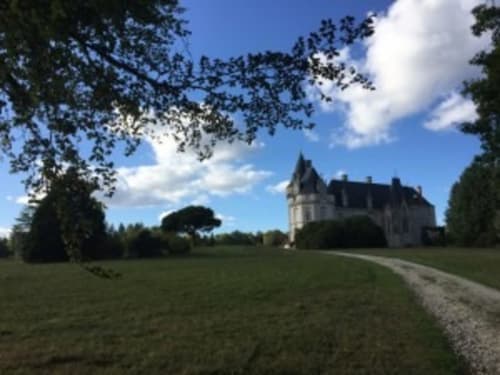
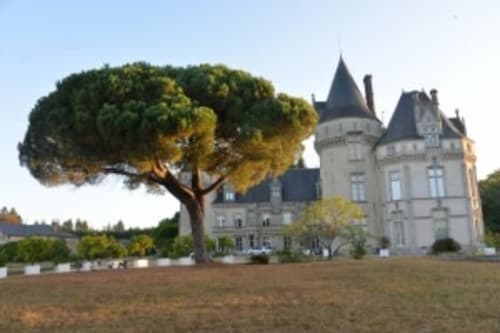
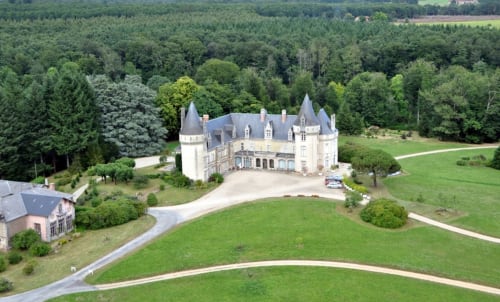
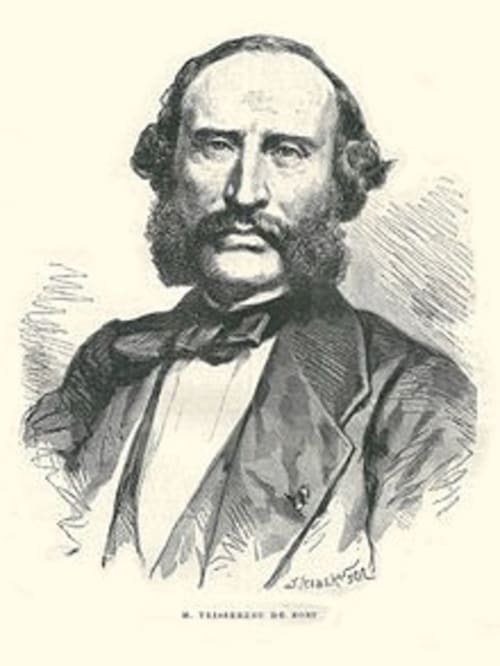
In the middle of the 19th century, his great-grandson, Pierre-Edmond TEISSERENC de BORT, completely transformed the castle, enlarged it, and modernized it.
It must be said that the disturbances of 1848 led to some attacks on castles. Let us listen to the account of the mayor of Ambazac, quoted by Alain Corbin in his work "Archaism and Modernity in Limousin in the 19th Century".
“At Bort, 200 or 250 individuals, along with a few women, armed with rifles, scythes, axes, etc., forced their way into the house, ransacked it, smashed the furniture, drank all the wine, ate all the bread, took the sugar, the lard, all the provisions that fell into their hands; broke the tiles and tore down the weathervanes; tried to force the steward to follow them…”.
It is likely that these events, which left Bort devastated, led Pierre-Edmond Teisserenc de Bort to use his skills as a polytechnic engineer to rebuild Bort. He undertook very extensive works that would last about ten years and completed a castle characteristic of the "neo-Gothic" style.
Unfortunately, these works, undoubtedly carried out too quickly, resulted in the construction of an inconvenient house, difficult to live in, and very difficult to maintain.

His great-grandson Edmond de SEZE and his wife were the first to live there permanently from 1948, and in the years 59/62 undertook very important works intended to allow Bort to face the centuries.
But Bort cannot be conceived without its estate. This is also the work of Pierre-Edmond TEISSERENC de BORT.
This polytechnician, deputy, Minister of Agriculture under the THIERS government, French ambassador to Vienna, industrialist, promoter of the Railway, retired to Bort, during a period of political inactivity.
He systematically acquired all the surrounding land, undertaking to modernize agriculture by creating a model farm intended to set an example for his tenant farmers and sharecroppers. He was one of those who, by creating agricultural competitions, contributed to saving and promoting the Limousin cattle breed.
He focused on developing the heaths and wetlands with which the BORT estate is abundant. He undertook the planting of Scots pines, the descendants of which can still be found in Bort today.
He planted the first Douglas firs introduced to France, which were given to him when he was Minister of Agriculture.800px-Teisserenc_de_Bort,_Edmond
His son Edmond Teisserenc de Bort continued his work, as did his granddaughter, Hermine TEISSERENC de BORT, who married Louis de SEZE in 1922.
Upon his arrival in BORT in 1947, Edmond de SEZE pursued a career as a farmer before gradually converting to forestry.
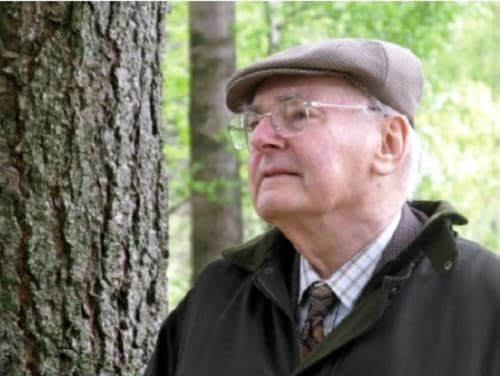
The farmers and sharecroppers of Bort are leaving one after another, which leads Edmond de SEZE to manage the entire estate directly.
After suffering two health failures, he was forced to abandon cattle farming, which had been the pride of Bort for decades.
He then turned to free-range sheep farming, which he helped promote in the Limoges region, following the example of farmers in Bellac and Montmorillon. This type of farming and practice requires less labor than other forms of production.
Alongside this sheep farming activity, Edmond de SEZE began very early, in the 1950s, to restore the wooded areas of Bort, which had been severely damaged by years of total abandonment and inconsiderate harvesting during the war.
He embarked on coniferous forestry and gradually replaced poor coppices, exploited for firewood by the neighbors, with plantations of spruce, pine and timidly Douglas fir, whose silviculture in France was still little known.
Bort then became a testing ground for all kinds of tree species, silvicultural practices, and management techniques.
Great Britain's entry into the Common Market caused the price of Limousin sheep to collapse, and Edmond de SEZE decided to resolutely orient the Bort estate towards the forest.
As the various shepherds retire, the land freed from sheep grazing is regularly planted, taking into account the experience learned over the previous years.
By the end of the 1980s, there were no more sheep left in the territory of Bort, of which only a very small part continued to be cultivated.
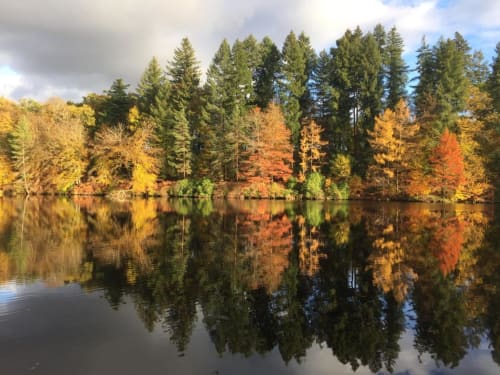
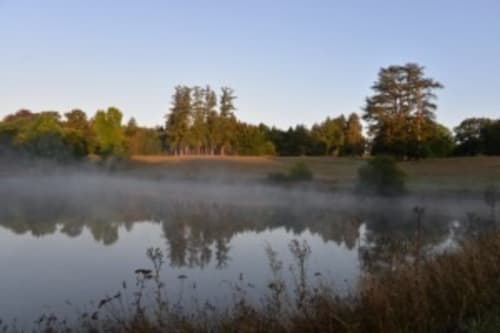
Four-fifths of Bort are now covered by a forest composed of 52% deciduous trees (oaks, red oaks, tulip trees, beeches, chestnut trees, alders, etc.), but also conifers (Douglas firs, larches, spruces, pines, etc.), still young, but carefully maintained, pierced by numerous tracks, enhanced by about fifteen ponds whose rental brings a small regular cash inflow, welcome in a period still devoted to investment.
Despite the very poor soil for agriculture, shallow and often waterlogged during the winter, the forest finds favorable living conditions and thrives. Douglas fir grows harmoniously there, not to mention the larches and red oaks that have been introduced in large numbers over the last twenty years.
The management plan anticipated that upon its expiry in 2005, the first plantings made some fifty years earlier could begin to enter production.
Then Hurricane Martin arrived in December 1999, and two-thirds of the timber in Bort was felled, crushed, and brought to the ground…
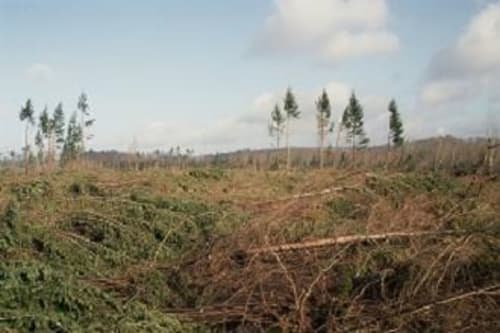
Since January 2000, they have undertaken major works, with the help of state funding, to clear the plots still cluttered with the remains of the difficult storm-damaged timber harvests, and to replant. The Bort forest is now fully restored and is PEFC certified, illustrating the sustainable management practiced there.
Agriculture in Bort today consists of the production of organic and HVE (High Environmental Value) certified chestnuts on about ten hectares.
They also have large-scale (organic) crops on 30 hectares and hay production on 20 hectares.
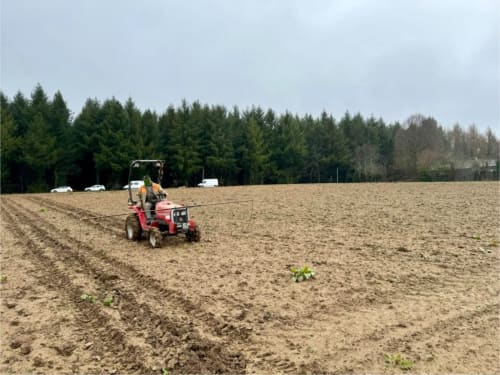
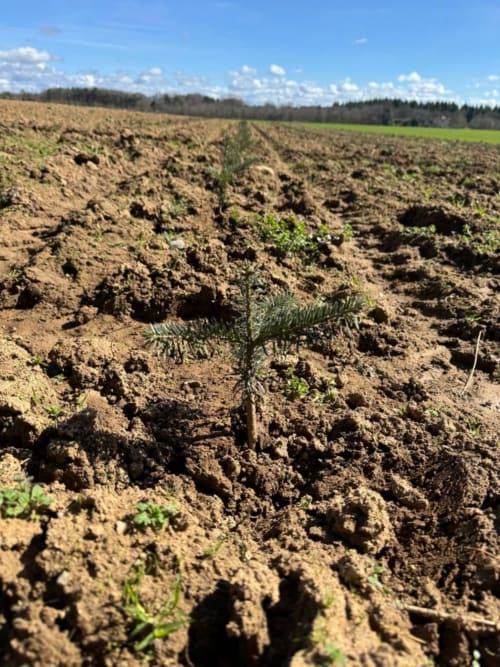
In 2024, Christmas trees were planted on 2 hectares. Our goal is to offer local residents Christmas trees for direct sale on-site starting in 2027/2028. You'll be able to come and choose your tree, which will be ultra-fresh and, of course, organic. We'll cut it down for you, and you can take home a high-quality, locally sourced product.
In 2007 Marc-Antoine and Sylvie rehabilitated an agricultural building in the former agricultural reserve and created 2 gîtes there: the Bûcher and the Volière.
After several months of work, they opened the guest rooms in the castle in collaboration with the previous generation.
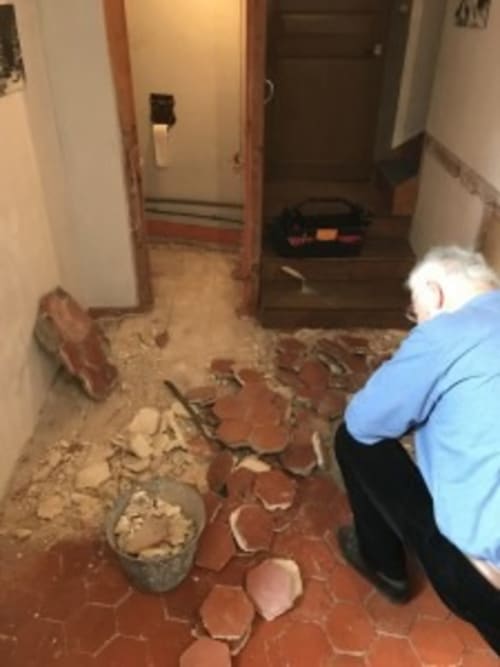
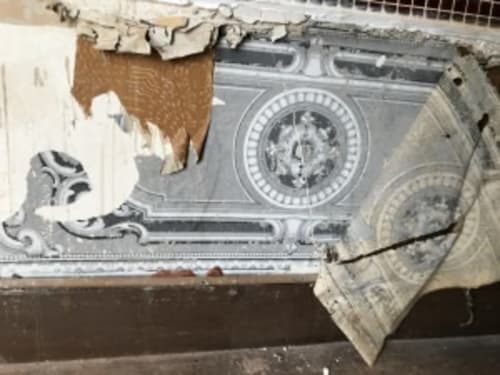
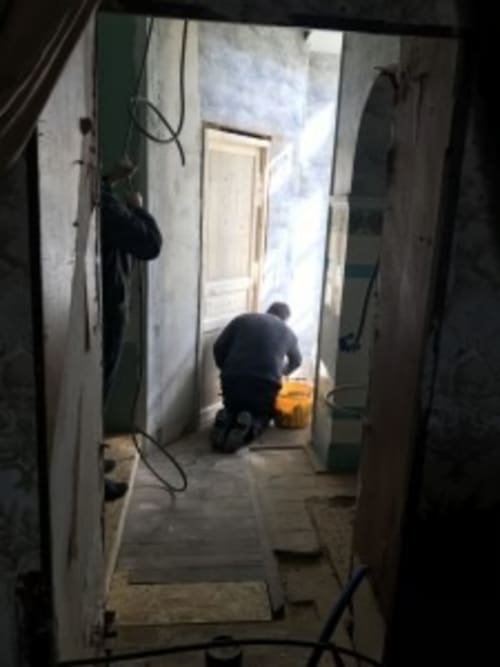
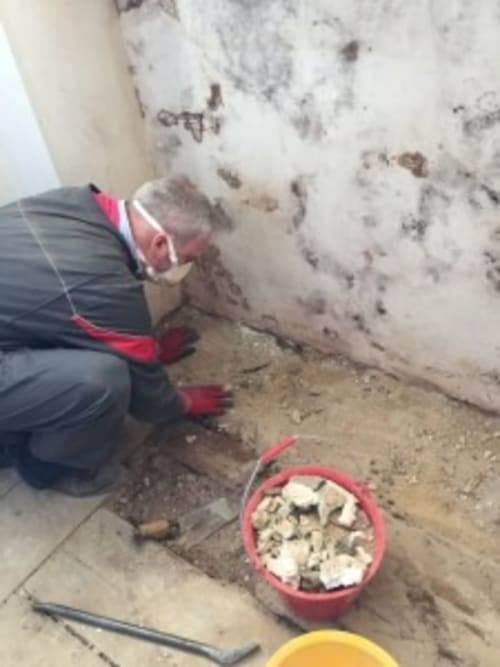
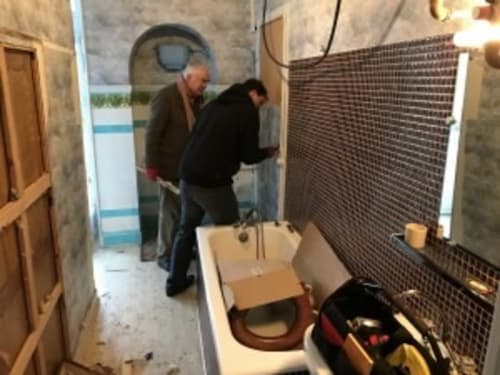
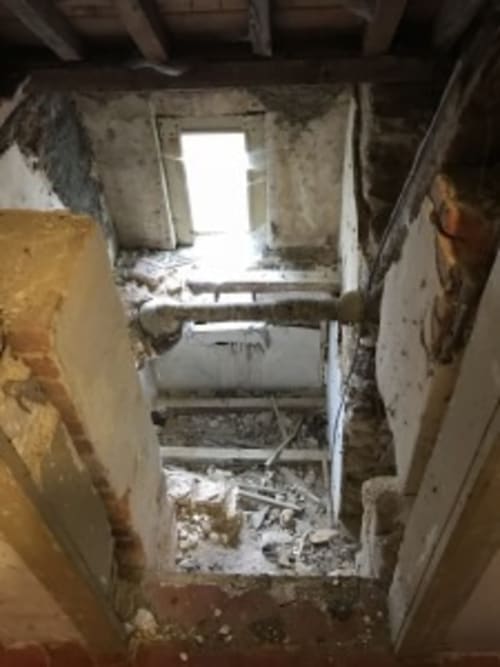
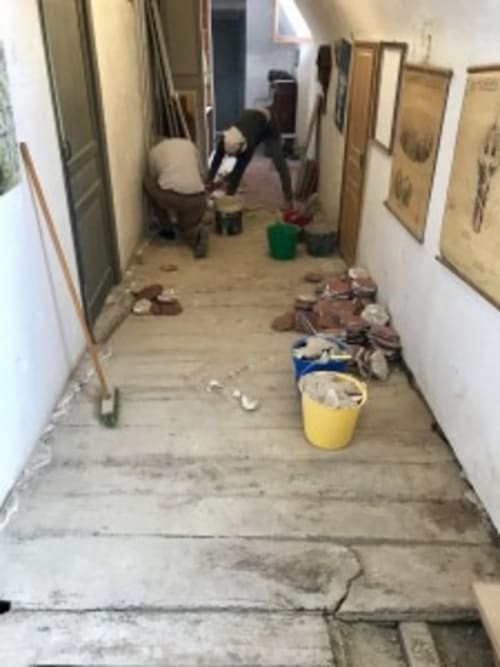
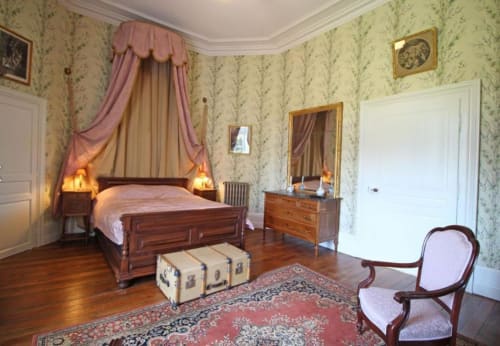
They also launched the opening of the castle and park to visitors, as well as activities for hosting seminars and corporate events.
This is how the first participation in the European Heritage Days took place in September 2018 and since then we have regularly welcomed you for visits in the summer or during special events (see the "visits" section).